
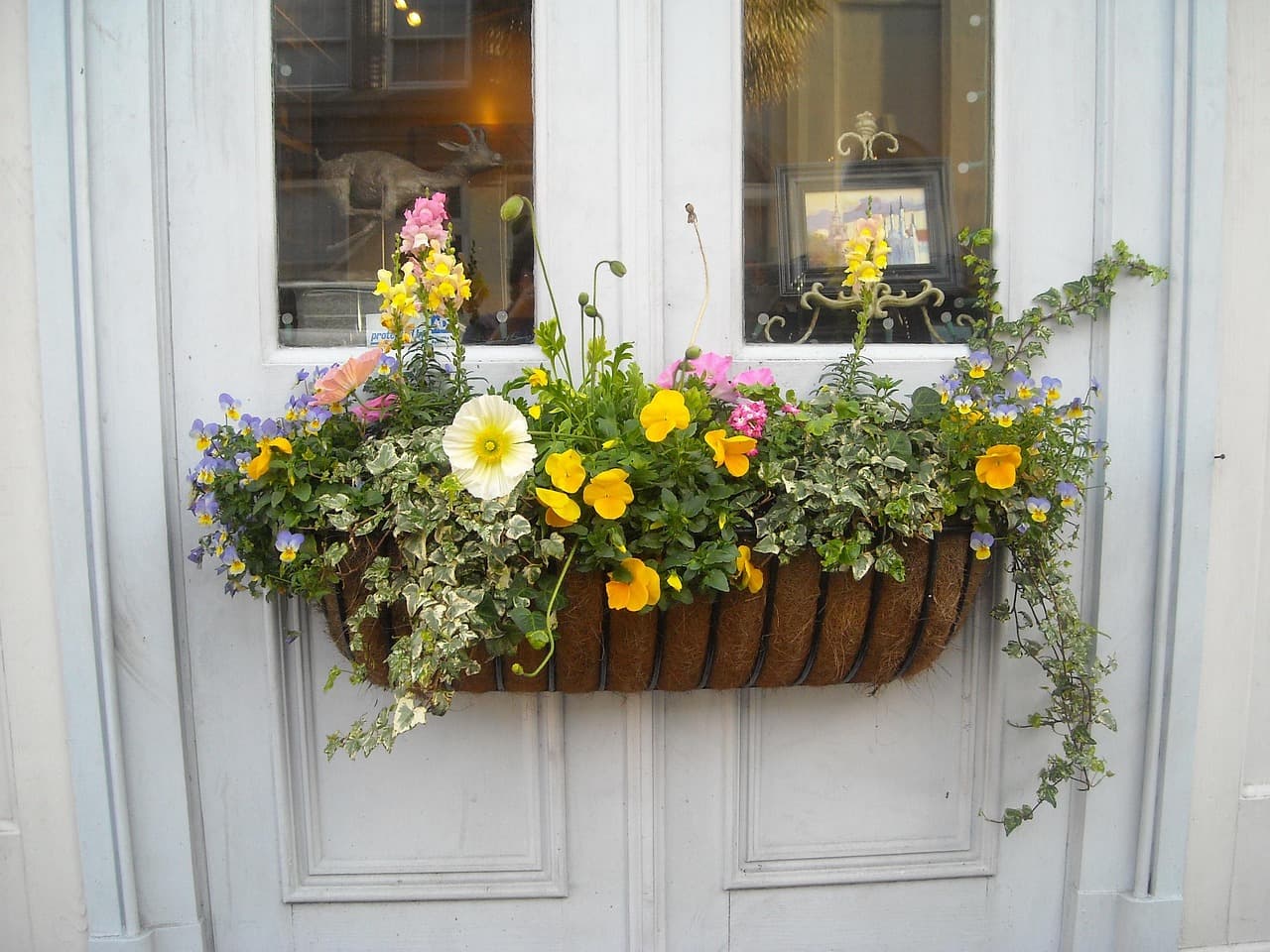
A thoughtful window box can visually extend a room, soften a facade, and give a home a more lived-in feel from the street. A poorly planned one draws the eye to itself for the wrong reasons: stretched-out leaves, wilting by July, and a box that looks smaller than it is.
A few straightforward rules cover most of what separates the two.
Size the box to the window, not the shelf
The most common sizing mistake is a box that is too small for the window it sits below. A box should roughly match the full width of the window frame or extend slightly beyond it. A narrow box tucked under a wide window looks like a shelf, not a planting.
Depth matters too. A deeper box, closer to nine or ten inches, holds more soil, retains moisture better, and supports a wider range of plants. A shallow box struggles in heat no matter how carefully you water.
Anchor, cascade, fill is still the right instinct
A window box benefits from the same structural logic as a good pot. You want:
- An upright or anchoring element (sometimes skipped intentionally, but the box reads differently without it).
- A mid-height filler that gives the box volume.
- A trailing plant that softens the front edge and lets the composition spill slightly.
Skip the trailing element and the box always looks stiff. Skip the mid-height filler and it looks sparse. Most boxes that feel wrong are missing one of those three roles.
Match plants to the actual exposure
Window boxes are micro-environments. A south-facing box on a brick wall can be twenty degrees hotter than a north-facing one across the house. Planting the same things in both is how you end up with one perfect box and one that looks scorched.
Sunny-exposure boxes generally do well with:
- Lantana.
- Angelonia.
- Calibrachoa.
- Sweet potato vine.
- Scaevola.
Shadier windows do better with:
- Begonias.
- Impatiens, especially New Guinea types.
- Coleus.
- Torenia.
- Ivy and other trailing foliage.
Reading exposure correctly is worth more than buying the most expensive plants.
Irrigation is the hardest part
Window boxes dry out faster than almost any other container. In full sun with a lot of foliage, they often need daily water, sometimes twice a day in a heat wave.
A few habits that help:
- Use boxes deep enough to hold meaningful water.
- Choose a quality potting mix with some water-holding capability, not generic topsoil.
- Consider a self-watering insert or a drip line if the box is out of easy reach.
- Check moisture by feel, not by schedule, during hot weeks.
A boxed planting that looks sad by mid-July is almost always a watering story, not a plant choice story.
Trim, deadhead, and edit regularly
Keep reading — start your 7-day free trial.
Premium members read every article in full, save reading lists and project plans, and use the Backyard Project Planner with custom budgets, printable summaries, and shopping lists. Cancel any time during the trial and you pay nothing.
- Finish this article and every other guide in the library
- Save articles and project plans to your account
- Use the full Backyard Project Planner with exact budgets, printable plans, and shopping lists
- Cancel in two clicks — no charge during the trial
No comments yet. Be the first reader to add context, ask a question, or share what happened in your yard.