
Sago palm keeps showing up in resort-style landscaping because it is sculptural, slow growing, and tidy. The problem is that the same plant can create a serious safety issue for households with curious dogs. If you like the look, it is worth knowing exactly what you have before you decide to keep it near a patio, play space, or pet run.
Why sago palm gets special attention
Despite the name, sago palm is not a true palm. It is a cycad, and animal poison resources routinely list it as toxic to dogs and cats. The ASPCA notes that all parts of the plant are a concern, with the seeds treated as especially dangerous. That is why many pet owners remove the plant even if they love the tropical silhouette.
The risk is not theoretical. Dogs investigate the yard with their mouths, and the seeds can be easy to notice if a plant is fruiting. If you suspect a pet chewed any part of a cycad, the safest move is to call your veterinarian or the ASPCA Animal Poison Control Center right away instead of waiting to see what happens.
How to identify it before you make a decision
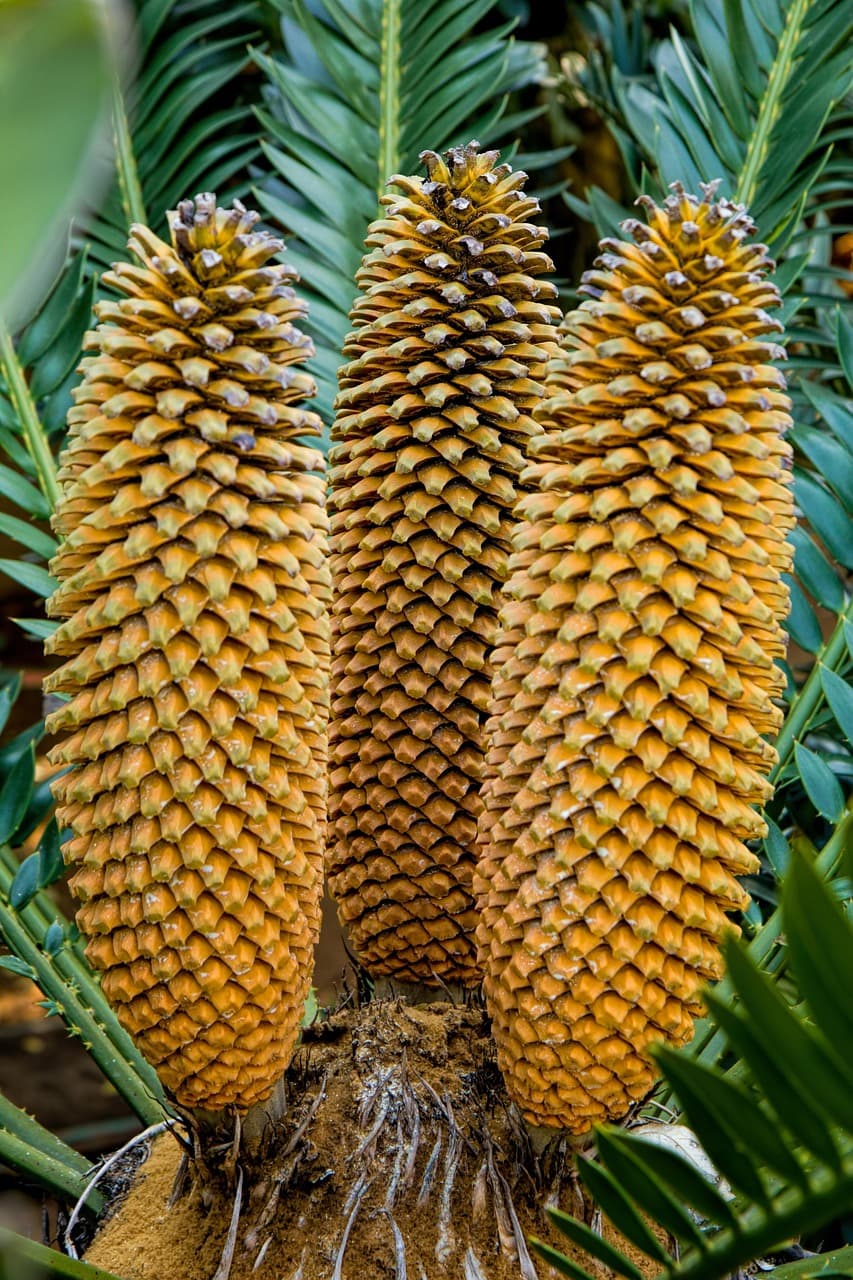
A sago palm usually has a tight rosette of stiff, glossy, feather-like fronds that radiate from a central crown. Older plants may develop a thick, rough trunk. Female plants can produce clusters of orange seeds in the center, while male plants often form an upright cone.
A quick backyard check:
- Fronds are stiff rather than soft and arching.
- Leaves grow from a central crown, not along a branching stem.
- The plant often looks symmetrical and architectural, almost like a permanent centerpiece.
- The trunk, if present, is chunky and textured rather than smooth.
If that description matches your plant, treat it as a cycad until a local nursery, extension office, or qualified landscape professional tells you otherwise.
What to do if a pet may have chewed it
This is the part where speed matters more than internet research. If you think a dog or cat chewed the plant, seeds, or roots, contact a veterinarian, emergency clinic, or poison resource immediately. Save a photo of the plant and, if possible, bring a sample for identification.
Do not rely on home remedies, and do not wait for symptoms before making the call. Exposure questions are one of the places where a real professional response beats DIY confidence every time.
Keeping the look without keeping the risk
Many homeowners are not attached to sago palm itself. They are attached to the visual effect: bold structure, evergreen texture, and a clean, modern feel. That opens the door to better choices.
Some alternatives to explore with your nursery:
Keep reading — start your 7-day free trial.
Premium members read every article in full, save reading lists and project plans, and use the Backyard Project Planner with custom budgets, printable summaries, and shopping lists. Cancel any time during the trial and you pay nothing.
- Finish this article and every other guide in the library
- Save articles and project plans to your account
- Use the full Backyard Project Planner with exact budgets, printable plans, and shopping lists
- Cancel in two clicks — no charge during the trial
No comments yet. Be the first reader to add context, ask a question, or share what happened in your yard.