
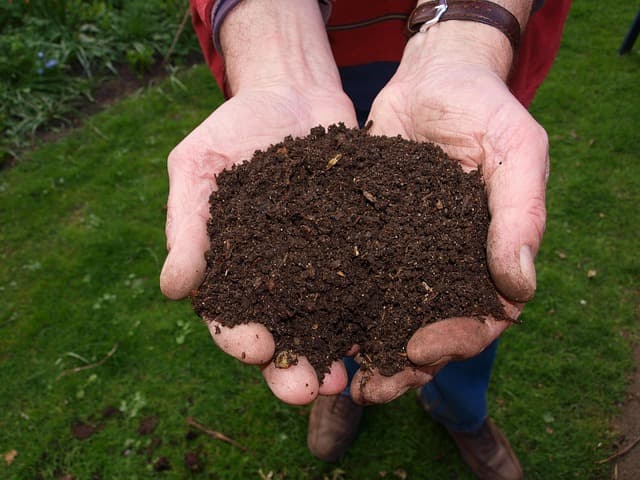
A tidy-looking pile is not the same thing as finished compost. Material can still be breaking down under a smooth surface, and using it at that stage can pull nutrients away from the plants you are trying to help rather than feed them.
The good news is that the signals of truly finished compost are easy to recognize once you know what to look for.
Texture: crumbly, not stringy
Ready compost feels like a dark, loose soil conditioner. You should not be able to pick out recognizable kitchen scraps, and most plant material should have lost its original shape.
If you still see stems, whole leaves, eggshell halves, or intact fruit skins, the batch probably needs more time. Those items will continue to decompose, and burying them mid-process can tie up nitrogen in the surrounding soil.
Color: consistent, earthy, and dark
Finished compost reads as a uniform dark brown or near-black. Streaks of lighter color or visible layers usually mean different pockets of the pile broke down at different rates.
This is common in cold compost systems or piles that were not turned. Mixing those pockets back in and letting the material sit another few weeks often evens things out.
Smell: earthy, not sour
A batch that is finished smells like forest floor or fresh garden soil. It should be a clean, grounded smell that you would not mind getting on your hands.
If the pile still smells sour, sharply acidic, or like ammonia, active decomposition is still happening. Using it now can stress seedlings and burn tender roots.
Temperature: the pile has cooled
A hot compost pile can hit high internal temperatures during peak decomposition. Once those temperatures drop and stay close to the surrounding air, microbial activity has slowed down.
A simple way to check is to push your hand into the center of a settled pile. If it feels noticeably warmer than the outside air, it is still working. Ready compost will feel the same temperature throughout.
Volume has shrunk significantly
Piles lose a lot of bulk as they finish. A bin that started heaping full will often end up at roughly a third to a half of its original volume.
If your pile looks about the same size as when you built it, it may still be early in the process. Turning it and checking moisture is usually more helpful than adding more green material on top.
Keep reading — start your 7-day free trial.
Premium members read every article in full, save reading lists and project plans, and use the Backyard Project Planner with custom budgets, printable summaries, and shopping lists. Cancel any time during the trial and you pay nothing.
- Finish this article and every other guide in the library
- Save articles and project plans to your account
- Use the full Backyard Project Planner with exact budgets, printable plans, and shopping lists
- Cancel in two clicks — no charge during the trial

No comments yet. Be the first reader to add context, ask a question, or share what happened in your yard.