
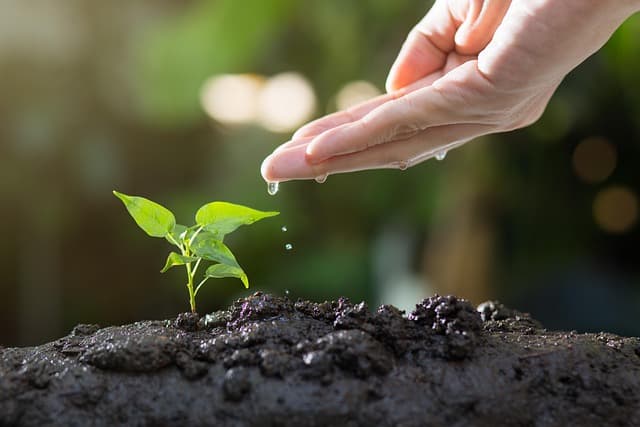
When a planting bed looks weak, the fastest reaction is often to buy something. More fertilizer, more compost blend, more "revive your lawn" product. The problem is that weak growth can come from several different causes, and some of them are not solved by feeding the soil harder.
A simple soil test slows the process down just enough to make the next decision smarter.
A soil test answers a different question than your eyes can answer
You can see yellow leaves, slow growth, patchy performance, or poor flowering. What you usually cannot see clearly is the underlying chemistry and balance in the root zone.
A test can help clarify:
- Soil pH.
- Whether key nutrients are low, moderate, or high.
- Broad patterns that explain why one bed performs differently than another.
That information is often more useful than a label promising quick results.
Start by testing the bed that is actually underperforming
Not every part of a property behaves the same way. A vegetable bed, a front foundation bed, and a side lawn strip can all need different treatment.
Instead of assuming the whole yard needs one answer, start with the area that is giving you the most trouble. That keeps the result tied to a real decision instead of turning the process into a vague "better soil" project.
Sampling matters almost as much as the result
A test is only as useful as the sample. Grab soil from a few representative spots in the same bed, avoid unusual pockets, and remove obvious debris before combining the sample.
The point is not laboratory perfection. It is giving the test a fair look at the area you are trying to improve.
If you sample one rich corner and one chronically dry edge as though they are the same bed, the result can be harder to act on.
Soil tests are especially helpful when pH is the real issue
One of the biggest advantages of testing is catching pH problems early. Nutrients may be present in the soil, but the plant may still struggle if the pH is out of range for what you are growing.
That is why fertilizing first can be wasteful. If the real issue is pH balance, more fertilizer may not solve the main problem and can complicate the next step.
Keep reading — start your 7-day free trial.
Premium members read every article in full, save reading lists and project plans, and use the Backyard Project Planner with custom budgets, printable summaries, and shopping lists. Cancel any time during the trial and you pay nothing.
- Finish this article and every other guide in the library
- Save articles and project plans to your account
- Use the full Backyard Project Planner with exact budgets, printable plans, and shopping lists
- Cancel in two clicks — no charge during the trial

No comments yet. Be the first reader to add context, ask a question, or share what happened in your yard.