
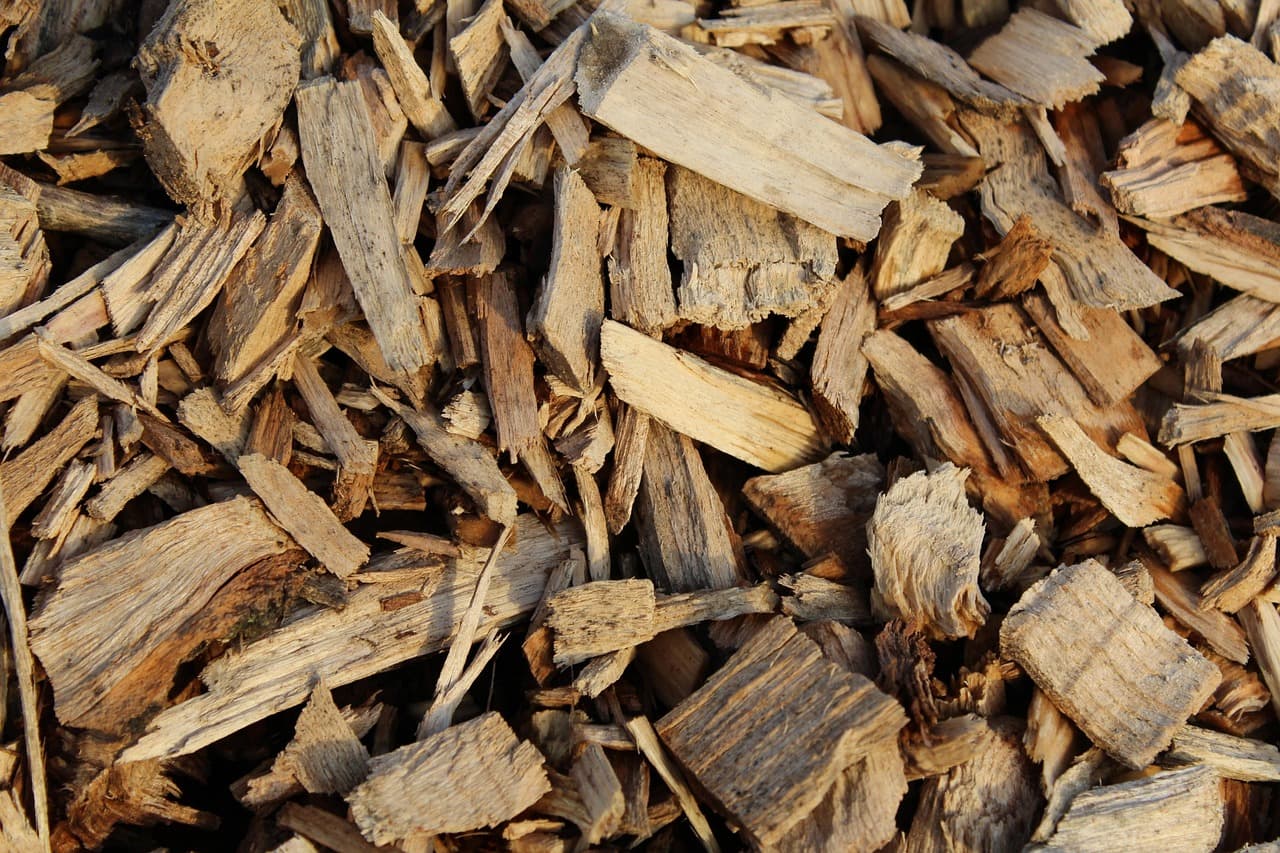
Mulch is one of the most useful tools in a yard. A clean, even layer protects soil from temperature swings, slows evaporation, suppresses weeds, and gives planting beds a finished look.
What it does not do is work better the thicker you pile it. Past a certain depth, mulch starts to cause problems instead of solving them, and many of the yards that struggle with declining shrubs and stressed trees are doing exactly one thing wrong: too much mulch in the wrong place.
Two to three inches is the range that does real work
For most woody plants and perennial beds, a finished mulch layer of about two to three inches is enough. That depth holds moisture, insulates roots, and blocks most weed germination without suffocating the soil underneath.
Anything much deeper starts to behave differently. Water has trouble moving through thick mulch, oxygen exchange to the soil slows, and the layer can mat into a crust that sheds rainfall rather than absorbing it.
The mulch volcano problem
The most common mistake in American yards is the mulch volcano. Mulch gets heaped directly against the trunk of a tree, sometimes a foot or more deep, forming a cone.
That shape is not just an aesthetic issue. It causes real damage:
- Bark stays wet and can rot.
- Rodents and insects nest inside the mound and feed on the trunk.
- Fine roots start growing into the mulch pile instead of down into the soil.
- Water runs off the cone and never reaches the actual root zone.
Trees that look healthy in year one often begin declining in year three or four from this pattern. By then, the cause is hidden under years of layered mulch.
How to mulch a tree correctly
The shape you want is a wide, shallow saucer, not a volcano.
- Pull mulch back so you can see where the trunk flares into the roots.
- Keep the mulch depth around two to three inches out in the ring.
- Extend the ring as far as practical, ideally out toward the drip line.
- Leave a clear space of a few inches around the trunk itself.
This is one of the single highest-return adjustments a homeowner can make for the long-term health of mature plantings.
Shrub beds follow a similar rule
Foundation plantings, flower beds, and mixed shrub borders do best with the same two to three inch range. The bed looks cleanly dressed without smothering the base of any plant.
Keep reading — start your 7-day free trial.
Premium members read every article in full, save reading lists and project plans, and use the Backyard Project Planner with custom budgets, printable summaries, and shopping lists. Cancel any time during the trial and you pay nothing.
- Finish this article and every other guide in the library
- Save articles and project plans to your account
- Use the full Backyard Project Planner with exact budgets, printable plans, and shopping lists
- Cancel in two clicks — no charge during the trial


No comments yet. Be the first reader to add context, ask a question, or share what happened in your yard.