
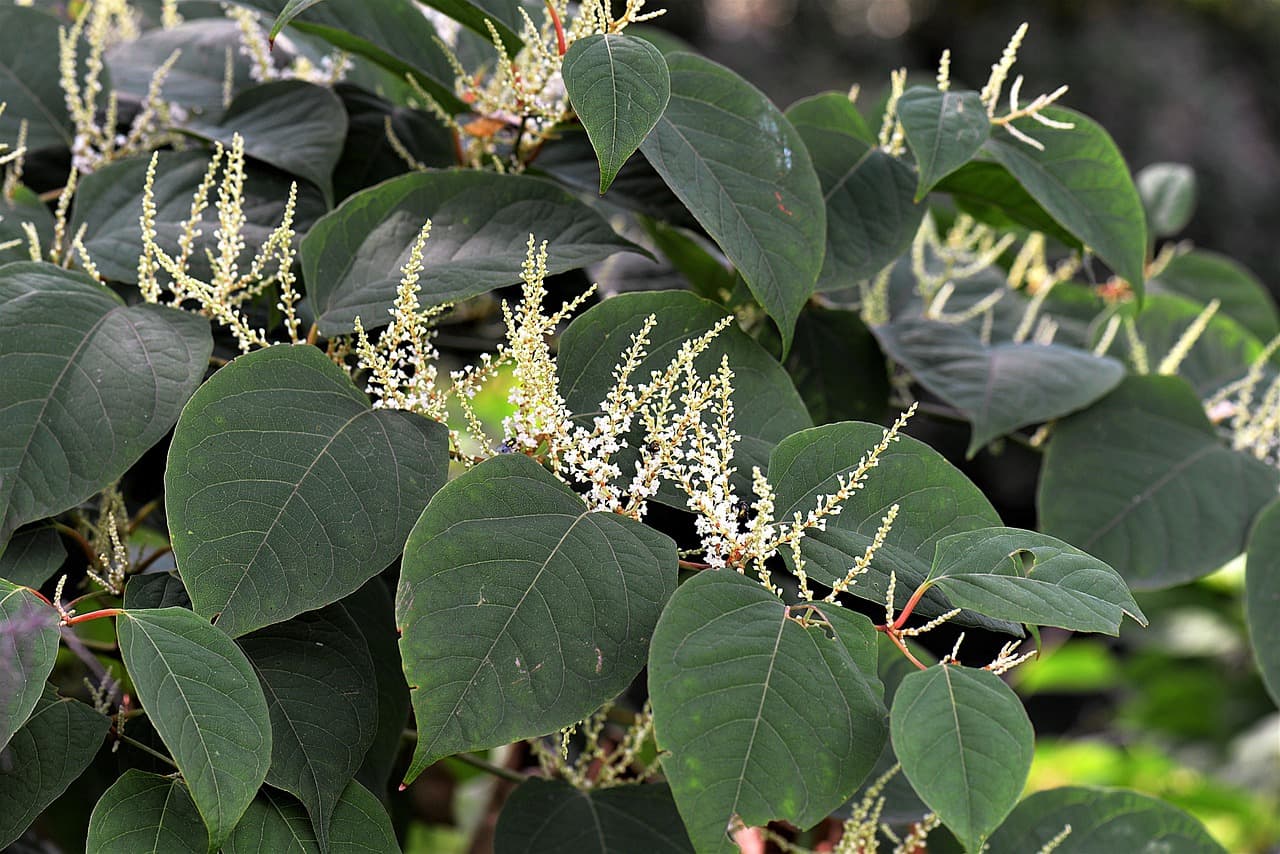
Japanese knotweed is one of the few yard problems where wrong action often makes things worse. Chopping it up, rototilling it, or trucking infested soil to a new spot does not remove knotweed. It moves it. Small fragments of root or stem can sprout into new plants, and some properties become overrun because an unaware owner tried to clear it without understanding how it spreads.
If you suspect knotweed, the right first step is identification, not action.
What Japanese knotweed looks like
A few features tend to be consistent:
- Hollow, bamboo-like stems with reddish or pinkish nodes.
- Large, shield-shaped leaves with a flat base and a pointed tip.
- Leaves arranged alternately along the stem in a zigzag pattern.
- Small creamy-white flower clusters in late summer.
- Fast-growing thickets that often form along property edges, waterways, or disturbed ground.
Young shoots in spring can resemble asparagus or rhubarb, which is why spring identification can be tricky for homeowners new to it.
Where it usually shows up
Japanese knotweed tolerates a wide range of conditions and spreads through underground rhizomes that can travel many feet from the visible plant. It is especially common along:
- Streambanks and drainage lines.
- Roadsides and former fill sites.
- Property boundaries where someone dumped yard waste decades ago.
- Edges where a neighbor has an established population.
If a neighbor has it, there is a reasonable chance some of its rhizomes have already extended onto your side.
Why aggressive DIY removal often backfires
This is the critical point that separates knotweed from most other weeds.
Pieces of knotweed rhizome, and sometimes even stem fragments, can generate new plants. That means:
- Rototilling an infested area can multiply it rather than clear it.
- Dragging cut stems through the yard can scatter new starts.
- Moving infested soil to a different spot can start a new patch there.
- Composting knotweed material can spread it once the compost is used.
Most extension and conservation guidance on knotweed strongly discourages digging it out as a DIY strategy for these reasons.
What works, in general terms
Knotweed management is typically a multi-year effort, not a single treatment. Approaches that tend to work over time include:
- Repeated, well-timed cutting over several years to starve the rhizome.
- Carefully applied systemic herbicide treatments, often in late summer, which travel into the rhizome.
- Site-specific professional management for large or established stands.
Even well-executed programs usually require three to five years of consistent follow-through before the site is truly quiet. Anyone promising a one-season fix is overselling.
Do not move the material
Keep reading — start your 7-day free trial.
Premium members read every article in full, save reading lists and project plans, and use the Backyard Project Planner with custom budgets, printable summaries, and shopping lists. Cancel any time during the trial and you pay nothing.
- Finish this article and every other guide in the library
- Save articles and project plans to your account
- Use the full Backyard Project Planner with exact budgets, printable plans, and shopping lists
- Cancel in two clicks — no charge during the trial

No comments yet. Be the first reader to add context, ask a question, or share what happened in your yard.