
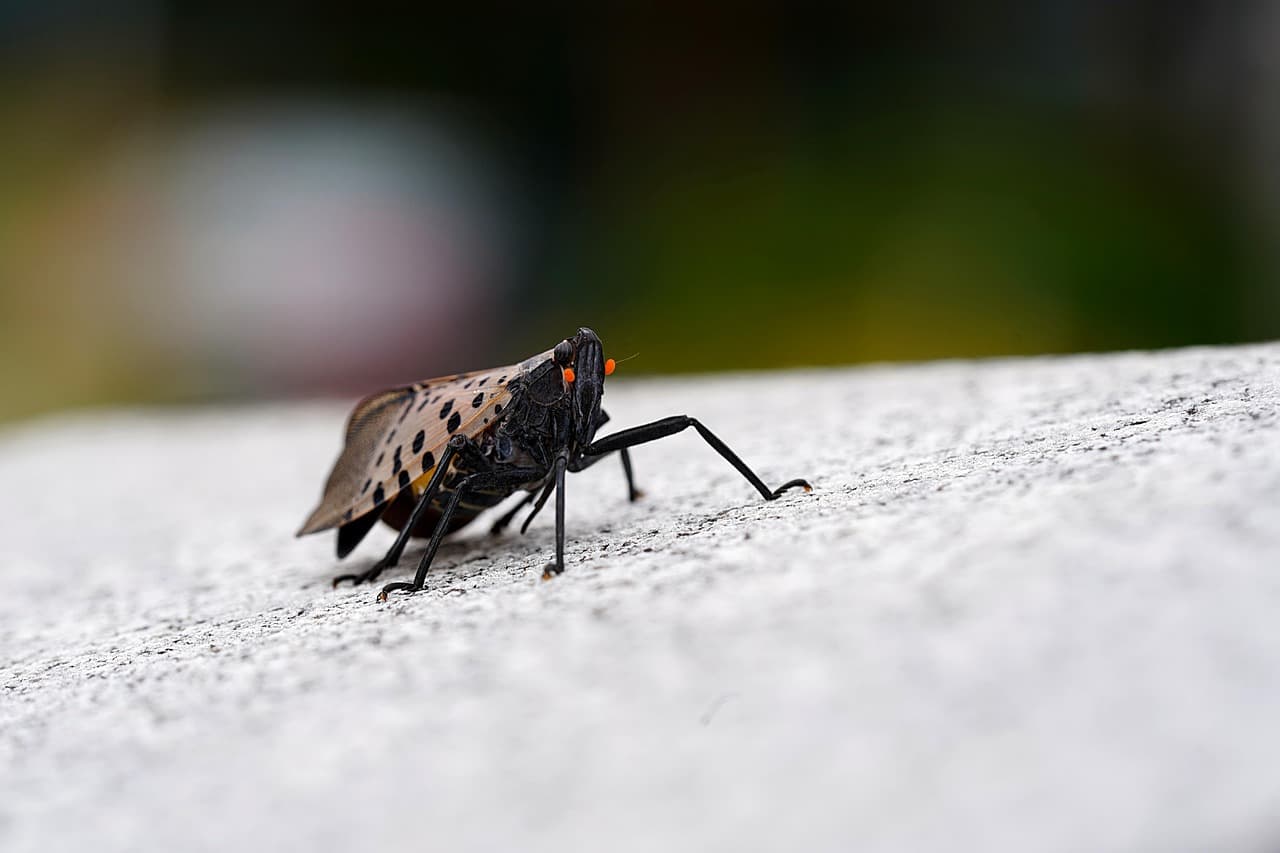
The dramatic part of spotted lanternfly coverage is easy to understand. The insect is visually striking, it gathers in numbers, and people want to know whether they should kill it on sight. But homeowners usually get more value from a different habit: checking for egg masses and inspecting outdoor items that can move the pest from one place to another.
Why the pest gets so much attention
The USDA Animal and Plant Health Inspection Service describes spotted lanternfly as an invasive planthopper that feeds on a wide range of plants. The insect is especially disruptive because it can gather in large numbers, leave sticky honeydew behind, and hitchhike on vehicles, firewood, grills, trailers, patio furniture, and other hard surfaces.
That hitchhiking behavior is a big part of the story. It means management is not only about what is feeding in the yard. It is also about what leaves the yard.
Egg masses are the smarter early target
APHIS guidance highlights the appearance of egg masses because they are easy to miss unless you know what you are looking for. Fresh masses can resemble wet putty, while older ones look more like a dull gray or brown smear of cracked mud on a smooth surface.
Places worth checking:
- Tree trunks and fence posts.
- Outdoor furniture and grills.
- Stone, brick, and hardscape edges.
- Trailers, equipment, and vehicles stored outside.
- Firewood and items that travel between properties.
If you live in or travel through an area with lanternfly regulations or established populations, this habit matters more than the occasional dramatic encounter on a porch rail.
One adult insect is not the full picture
People often focus on whether to stomp or squash the bug in front of them. That can remove one insect, but it does not tell you whether egg masses are nearby or whether the insect arrived on an item that could keep moving.
A better response sequence is:
- Confirm that the insect is really spotted lanternfly and not a lookalike.
- Check nearby surfaces for egg masses or clusters.
- Inspect vehicles, furniture, and equipment that may leave the property.
- Follow the reporting or management guidance for your state if required.
Keep reading — start your 7-day free trial.
Premium members read every article in full, save reading lists and project plans, and use the Backyard Project Planner with custom budgets, printable summaries, and shopping lists. Cancel any time during the trial and you pay nothing.
- Finish this article and every other guide in the library
- Save articles and project plans to your account
- Use the full Backyard Project Planner with exact budgets, printable plans, and shopping lists
- Cancel in two clicks — no charge during the trial



No comments yet. Be the first reader to add context, ask a question, or share what happened in your yard.