
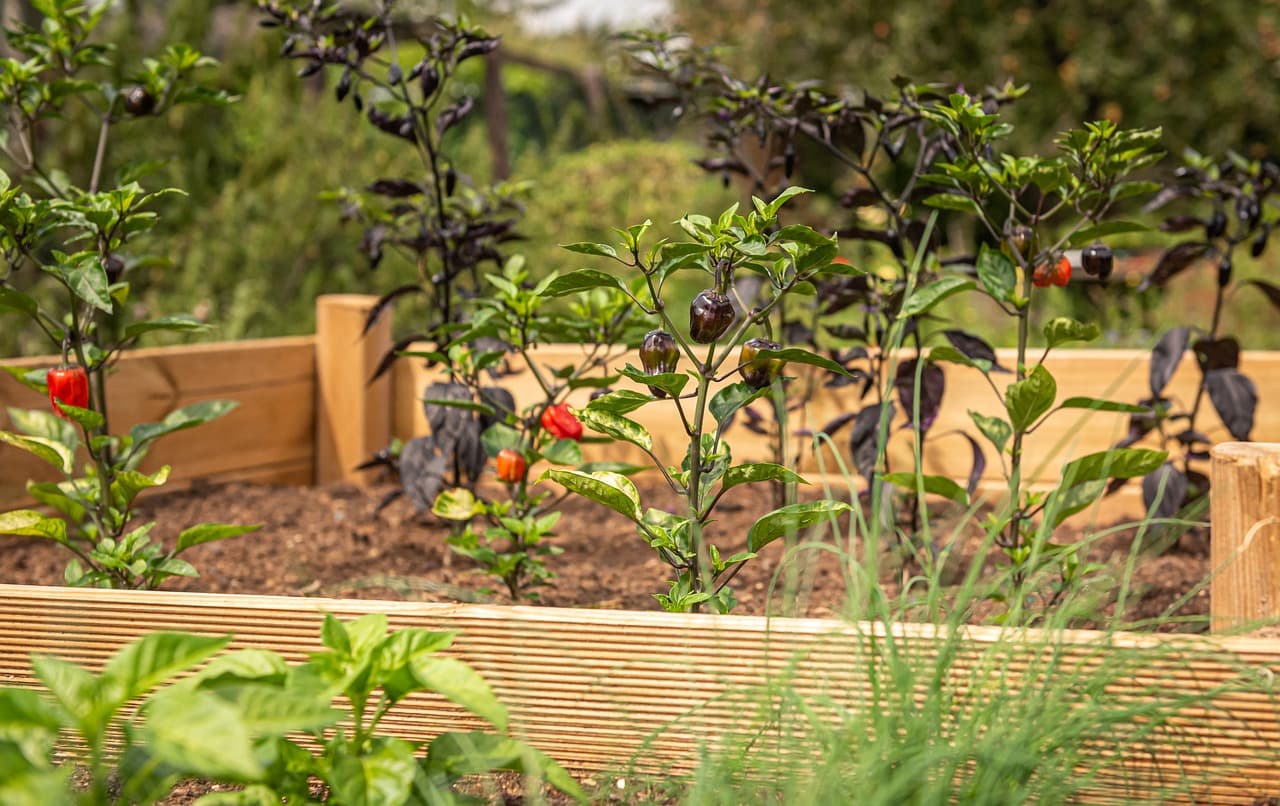
Small-space gardeners often assume they need multiple beds before the harvest feels worthwhile. In practice, one raised bed can carry a surprising amount of useful food if the layout is organized around height, timing, and access.
The goal is not to cram everything in. It is to place each crop where it can succeed without shading or crowding the rest.
Start with the bed size and the light you actually have
A common beginner mistake is copying a layout that depends on more sun than the yard receives. Before you decide where herbs, greens, and summer crops go, confirm which side of the bed gets the longest direct light and which edge faces the strongest afternoon exposure.
In most layouts, tall warm-season crops belong where they will not cast long shadows across the lowest growers.
Give the tallest crops one defined zone
Tomatoes, trellised cucumbers, pole beans, or peppers with supports usually do best when they are grouped intentionally instead of scattered. Putting the tallest crops along one side keeps supports simpler and protects the rest of the bed from becoming a tangle.
That also makes harvesting easier. You know where the vertical crops live, and the rest of the bed stays easier to reach.
Use the edges for herbs and repeat harvests
The bed perimeter is valuable space, especially for herbs and cut-and-come-again greens. Basil, parsley, chives, leaf lettuce, arugula, and other compact crops often make sense around the outside where they are easy to snip without stepping into the bed.
These crops also reward frequent attention, so putting them on the easy-access edge improves the odds that they actually get harvested.
Treat spring greens and summer crops as a sequence, not rivals
One reason raised beds underperform is that gardeners make every planting decision at once. A better layout often includes a handoff.
Cool-season greens can use space early. Warm-season crops can take over later. Herbs may hold steady all season while one square gets replanted after a first harvest.
Keep reading — start your 7-day free trial.
Premium members read every article in full, save reading lists and project plans, and use the Backyard Project Planner with custom budgets, printable summaries, and shopping lists. Cancel any time during the trial and you pay nothing.
- Finish this article and every other guide in the library
- Save articles and project plans to your account
- Use the full Backyard Project Planner with exact budgets, printable plans, and shopping lists
- Cancel in two clicks — no charge during the trial
No comments yet. Be the first reader to add context, ask a question, or share what happened in your yard.