
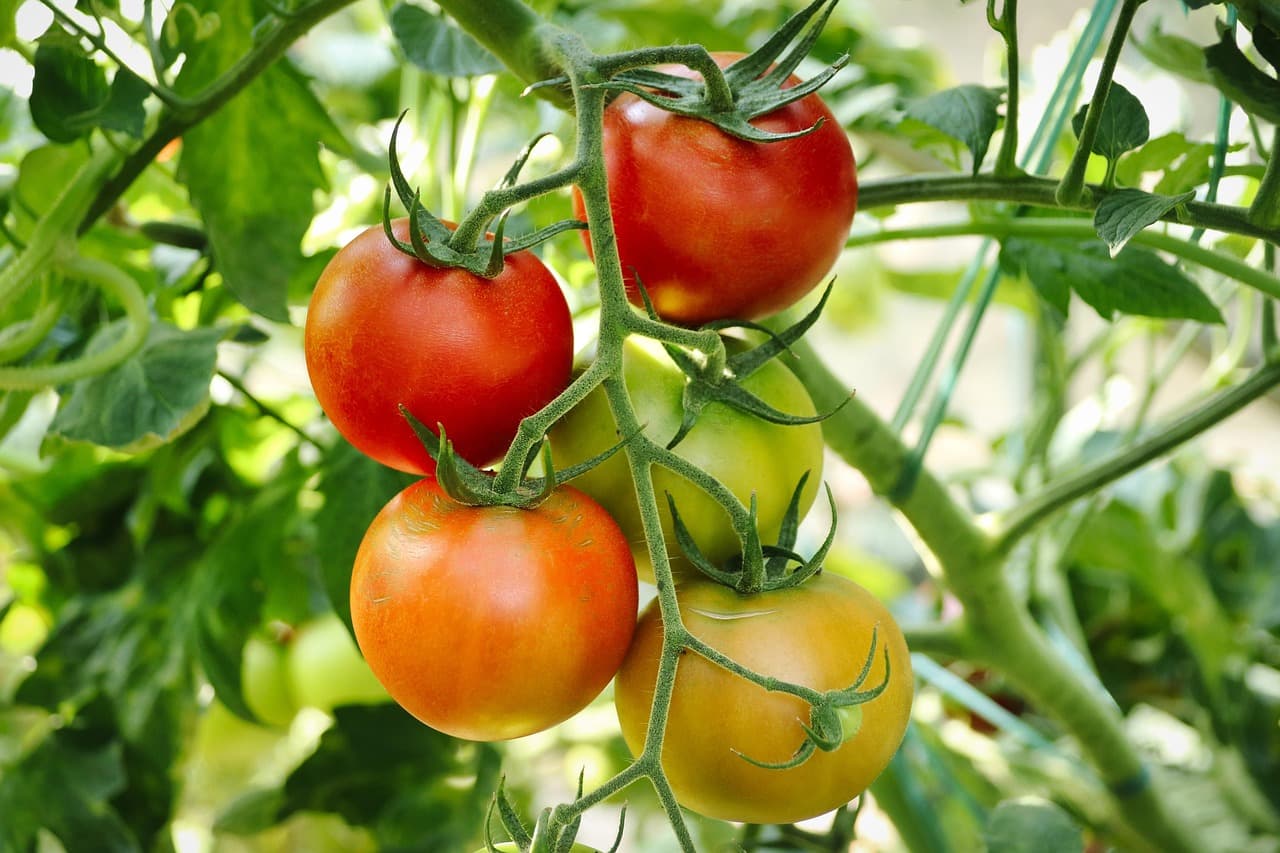
Tomatoes grow in two general patterns, and choosing the right support system starts with recognizing which kind you are planting. Determinate varieties grow to a set size, set most of their fruit in a concentrated window, and stay relatively tidy. Indeterminate varieties keep growing, branching, and setting fruit until frost, and they need serious structural help to hold themselves up.
No single staking system is best. The right one depends on the variety, your space, and how much pruning and tying you are willing to do.
Single stake with pruning to one or two leaders
A single stout stake and a single or double leader is the classic approach for indeterminate varieties where space is tight and production is the focus.
How it works:
- Drive a tall, sturdy stake right at planting time.
- Tie the plant loosely to the stake every eight to twelve inches as it grows.
- Prune suckers regularly to maintain one or two main stems.
Strengths include easy access to fruit, strong airflow that can reduce disease pressure, and tidy rows. The drawback is that it requires regular attention. Skip a week and the plant flops.
Tall cages built for tomatoes, not tomato-shaped hoops
The cheap wire cones sold at big-box stores are fine for small determinates. They are usually inadequate for real indeterminate tomatoes, which will tip them over by August.
A serious tomato cage is larger, taller, and stronger. Many gardeners build their own from concrete reinforcement mesh, usually called remesh, cut and rolled into cylinders about five feet tall.
What that gets you:
- Plenty of room for indeterminates to sprawl inside the structure.
- Minimal pruning, because the cage holds the natural bushy shape.
- Less tying, since the plant leans against the grid.
The tradeoff is cost and storage. Homemade cages take up space in the off-season, though they typically last many years.
The Florida weave for rows of determinates
The Florida weave is the method many small market farms use for long rows of determinate or semi-determinate tomatoes. It is also a practical home garden method when you have several plants in a row.
Basic setup:
- Drive stout stakes every couple of plants along the row.
- Run heavy twine along one side of the row at roughly the height of the growing plants.
- Weave the twine through and around the plants and stakes.
- Add a new height every eight to twelve inches as plants grow.
The result is a zipper-like support that holds a row upright without individual ties. It is fast once you get the rhythm, and tear-down at the end of the season is quick.
Spiral stakes for tidy containers and small beds
Spiral tomato stakes are a popular option for container growing or small raised beds with a single plant. The growing main stem weaves up the spiral on its own, requiring little or no tying.
They work best with:
- Indeterminate cherry tomatoes in larger pots.
- Patio-style varieties.
- Situations where appearance matters as much as production.
Keep reading — start your 7-day free trial.
Premium members read every article in full, save reading lists and project plans, and use the Backyard Project Planner with custom budgets, printable summaries, and shopping lists. Cancel any time during the trial and you pay nothing.
- Finish this article and every other guide in the library
- Save articles and project plans to your account
- Use the full Backyard Project Planner with exact budgets, printable plans, and shopping lists
- Cancel in two clicks — no charge during the trial
No comments yet. Be the first reader to add context, ask a question, or share what happened in your yard.